
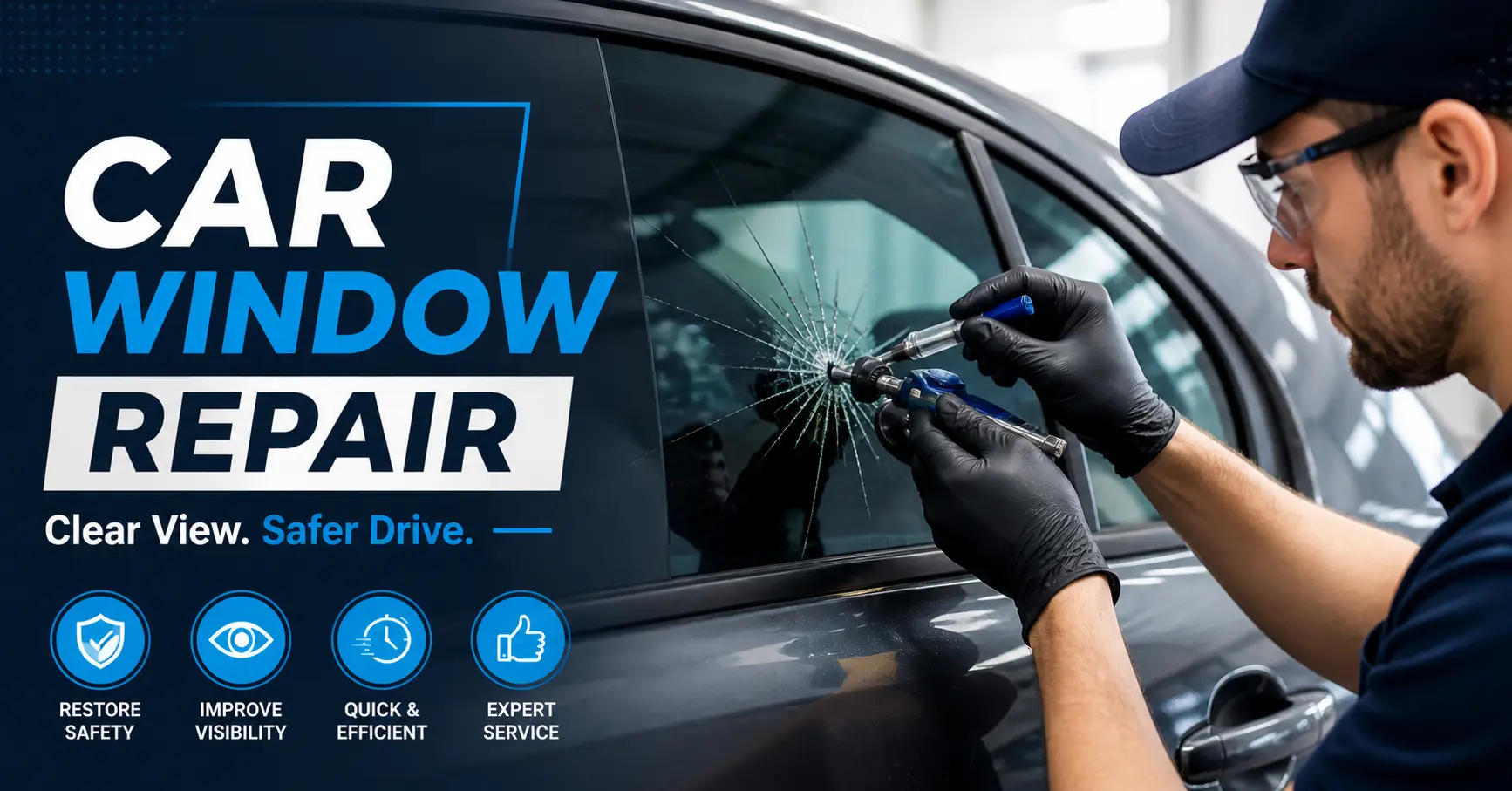
Why Car Window Health Is a Safety Issue — Not Just Cosmetic
Most drivers treat a small crack or chip as an inconvenience. They avoid looking at it. They tell themselves they’ll deal with it later. But your car’s windows — especially the windshield — are critical structural and safety components, making Car Window Repair essential.
Here’s what’s at stake when you ignore damage:
- Structural integrity: In a rollover accident, your windshield contributes up to 60% of the roof’s crush resistance. A compromised windshield can collapse inward during a rollover.
- Airbag deployment: The front passenger airbag is designed to deploy against the windshield and bounce back to protect the occupant. A cracked or improperly bonded windshield may not provide enough resistance — causing the airbag to fail.
- Visibility: Cracks and chips scatter light, especially at sunrise, sunset, or against oncoming headlights. This creates dangerous blind spots.
- Spreading damage: Temperature swings, vibrations from driving, and car wash water pressure can turn a 2-inch crack into a 12-inch spiderweb overnight.
Important
In many U.S. states, driving with a crack in your direct line of sight is illegal and can result in a traffic fine — on top of the cost you’ll pay when the damage inevitably gets worse.
The bottom line: addressing car window damage quickly is always cheaper and safer than waiting. A $60 chip repair today could save you a $400 replacement next month.
Types of Car Windows & How They Differ
Not all car windows are made the same — and that determines how they break, how they’re repaired, and how much replacement costs.
Windshield (Front Glass)
Made from laminated glass — two layers of glass bonded to a plastic PVB (polyvinyl butyral) interlayer. When it breaks, it cracks but stays in one piece. This is why chips and cracks can often be repaired with resin injection. The windshield is also bonded to the car body with urethane adhesive, which is part of your vehicle’s structural system.
Side Windows & Vent Windows
Made from tempered glass. When tempered glass is broken, it shatters into hundreds of small, dull cubes rather than sharp shards — a deliberate safety feature. Because of this, tempered glass cannot be repaired; it must be replaced. Side windows are typically held in by a rubber seal and raised/lowered by a window regulator.
Rear Window (Back Glass)
Also tempered glass. The rear window usually contains defroster lines (those thin horizontal wires), which means replacement requires reconnecting the defroster circuit. Rear windows are often more expensive than side windows because of this.
Sunroof / Moonroof
Can be either laminated or tempered depending on the vehicle. Sunroofs are particularly prone to impact from falling objects (branches, hail). Replacement costs are higher because the glass is often curved and the hardware is complex.
Quarter Glass
The small fixed glass panes at the rear corners of the vehicle. Usually tempered and relatively inexpensive to replace — but can be tricky due to tight fitment.
Identifying the Type of Damage You Have
Before you decide on a repair approach, you need to know what you’re dealing with. Different damage patterns have very different outcomes.
Bullseye Chip
A circular chip from a direct impact. Usually < 1 inch in diameter. The cleanest damage to repair.
Usually repairable
Star Break
Impact point with several cracks radiating outward like a star. Repairable if under 3 inches across.
Often repairable
Combination Break
A bullseye with additional radiating cracks — a mix of both types above.
Possibly repairable
Linear Crack
A straight or curved crack without a central impact point. Under 6 inches may be repairable.
Size-dependent
Edge Crack
Any crack that starts within 2 inches of the windshield edge. These spread rapidly and compromise bonding.
Replacement only
Floater Crack
A long crack in the middle of the glass not caused by a single impact point. Over 6 inches = replace.
Usually replace
Pro Tip
Run your fingernail across the damage. If the nail catches inside the crack, the damage has penetrated the inner layer — that typically means replacement, not repair.
Repair vs. Replacement: The Full Decision Guide
This is the most common question drivers ask. The answer depends on five factors: size, location, depth, type of damage, and the age of the glass.
Quick Decision Framework
Repair may work if:
- Chip is smaller than a quarter (1 inch)
- Crack is shorter than 6 inches
- Damage is NOT in driver’s direct sightline
- Damage is NOT at the windshield edge
- Damage is on outer layer only (scratch test)
- Glass is otherwise in good condition
- Damage is a clean bullseye or star break
You need replacement if:
- Crack is longer than 6–8 inches
- Crack starts at the windshield edge
- There are multiple cracks or damage points
- Damage is in the driver’s direct line of sight
- Glass is heavily pitted or scratched overall
- Inner layer is compromised
- It’s a side/rear window (tempered – replace only)
What About Location on the Windshield?
Where a crack sits matters as much as its size. Most states prohibit repairing damage that falls directly in the driver’s primary viewing area — a roughly 12-inch zone centered on the steering wheel. Even if the repair is technically possible, a repaired chip in this zone creates minor optical distortion that can be distracting or legally non-compliant.
“A repair that passes the size test but fails the location test is still a replacement job.“
How to Fix a Cracked Car Window Yourself (Step-by-Step)
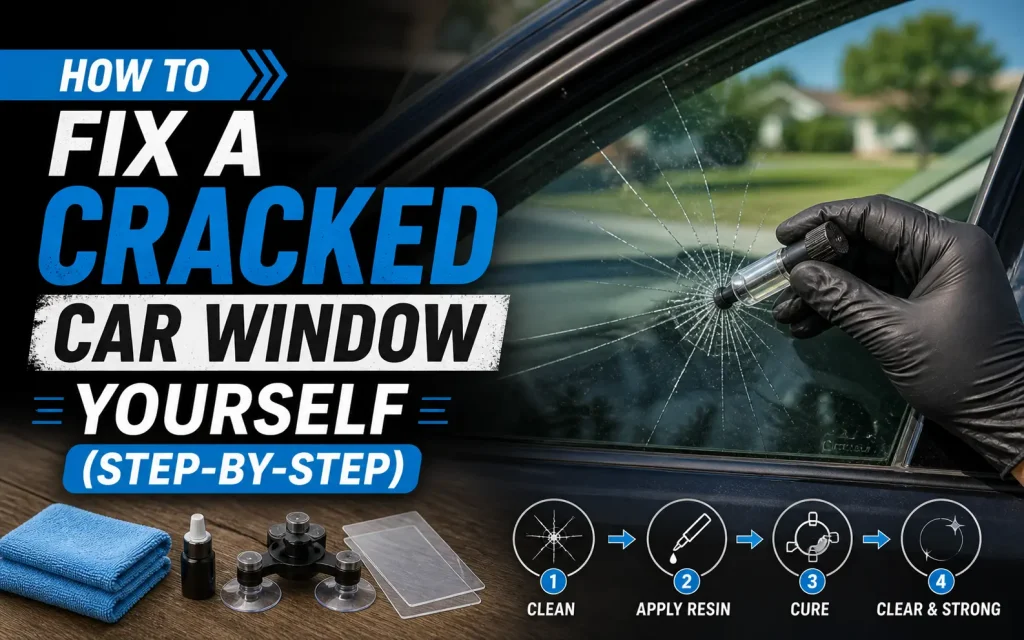
DIY windshield chip and crack repair is genuinely effective when the damage is eligible. A quality repair kit runs $10–$25 and can produce results nearly as good as a professional if you follow the steps carefully.
Before You Start — Is Your Damage DIY-Eligible?
DIY repair only works on windshield chips under 1 inch and cracks under 3–6 inches (check your kit’s specs). Tempered glass (side, rear windows) cannot be repaired — only replaced. Do not attempt to DIY damage in your direct line of sight.
What You’ll Need
- Windshield repair kit (resin-based — check expiry date, use within 6 months of manufacture)
- Clean microfiber cloths
- Isopropyl alcohol (91% or higher)
- A pin or thumbtack
- Razor blade / plastic scraper
- UV lamp or a sunny day
- Gloves and safety glasses
- Masking tape (optional but helpful)
Step-by-Step Repair Process
- 1 Park in the Shade and Wait for the Glass to Cool
Hot glass expands and contracts, which affects resin bonding. The glass surface should be between 50°F and 75°F (10°C–24°C). Never repair in direct sunlight or when rain is forecast. - 2 Clear the Damage of Loose Glass and Debris
Use your pin or thumbtack to carefully poke out any loose glass fragments from the chip. Do this gently — you’re clearing debris, not digging. Wear gloves; edges can be razor-sharp. - 3 Clean the Area Thoroughly
Apply a small amount of isopropyl alcohol to a microfiber cloth and wipe around the chip. Work inward and allow it to evaporate completely before proceeding — even microscopic moisture will ruin the bond. - 4 Apply the Adhesive Patch and Pedestal
Peel the backing off the kit’s adhesive patch and center it precisely over the chip or crack, working from the exterior of the glass. Press the plastic pedestal — the tube that holds the resin — onto the patch and lock it in place. - 5 Inject the Resin
Fill the pedestal chamber with the resin supplied in the kit. Insert the syringe and press it fully down to force the resin into the crack. Then slowly pull the plunger back to create a vacuum — this draws air bubbles out of the damage. Watch for bubbles rising into the pedestal chamber. This may take 5–10 minutes. Be patient. - 6 Press the Resin In and Remove the Pedestal
Once air bubbles stop appearing, push the syringe down one final time to force resin fully into the crack. Carefully remove the syringe, pedestal, and adhesive patch. Add a single drop of resin to the top of the repair if there’s any indent. - 7 Apply the Curing Strip and Cure the Resin
Lay the curing strip flat over the repair — smooth it down carefully to eliminate air bubbles underneath. Move the car into direct sunlight or use a UV lamp. Allow at least 15–30 minutes of UV exposure. In cold or overcast weather, extend this to 45–60 minutes. - 8 Remove the Strip and Polish the Surface
Once cured, use your razor blade at a very flat angle to scrape off the curing strip and any excess hardened resin. Work with light, even strokes. Wipe clean with a dry microfiber. Your windshield should look nearly as good as new.
Common DIY Mistakes to Avoid
Do This
- Work in shade with dry glass
- Check kit expiry before using
- Wait for all bubbles to clear
- Use full UV cure time
- Scrape at a flat angle
Avoid This
- Repairing in rain or humidity
- Rushing the bubble removal step
- Cutting cure time short
- Driving immediately after (give it 1 hour)
- Using expired resin kits
When & How to Use a Professional
For anything beyond a small chip or short crack, or any side/rear window, you need a professional. Here’s what to look for — and what to avoid.
What Makes a Good Auto Glass Shop?
- AGSC Certification: The Auto Glass Safety Council (AGSC) certifies technicians to Federal Motor Vehicle Safety Standard (FMVSS) No. 212. Always ask if technicians are AGSC-certified.
- OEE vs. OEM glass: Ask whether they use OEM (Original Equipment Manufacturer) glass or OEE (Original Equipment Equivalent). OEE from certified suppliers is generally acceptable. Avoid shops that can’t tell you which they use.
- Proper cure time: A reputable shop will advise you to wait at least 30–60 minutes before driving (sometimes up to 24 hours for a full cure). If they say “drive immediately” after a replacement, be skeptical.
- Written warranty: Get the labor and materials warranty in writing. Quality shops offer at least 12 months against defects, leaks, or air noise.
- Mobile service: Many shops will come to your home or office. This is convenient, but confirm the technician is trained to the same standard as an in-shop job.
- Red Flags to Watch Out For
Be wary of shops offering unusually low prices (significantly below $200 for a windshield replacement), no written warranty, inability to explain the glass source, or pressure to skip ADAS calibration. - Mobile vs. In-Shop Repair
Mobile repair services have become very common and are perfectly acceptable for most jobs — chip repairs, standard windshield replacements, and side window replacements. However, for vehicles with complex ADAS systems or heated windshields, an in-shop job at a facility with calibration equipment is often preferable.
Real Cost Breakdown by Window Type
Costs vary significantly by vehicle make and model, glass type (OEM vs. aftermarket), your location, and whether ADAS calibration is needed. Use this as a reliable starting-point guide.
| Service | DIY Cost | Professional Cost | Notes |
|---|---|---|---|
| Windshield chip repair | $10–$25 | $50–$100 | Often $0 with insurance (no deductible) |
| Windshield crack repair (short) | $10–$25 | $60–$130 | Discount if multiple cracks on same visit |
| Windshield replacement (economy car) | N/A | $200–$350 | Higher with ADAS camera: add $150–$300 |
| Windshield replacement (luxury/SUV) | N/A | $350–$700+ | HUD or heated glass adds significant cost |
| Driver/passenger side window | N/A | $150–$350 | Power window regulator may add $150–$250 |
| Rear window replacement | N/A | $200–$450 | Defroster reconnection included in quality shops |
| Quarter glass replacement | N/A | $100–$250 | Usually straightforward — fixed glass |
| Sunroof glass replacement | N/A | $250–$700+ | Highly variable by vehicle; OEM often required |
| ADAS recalibration (after replacement) | N/A | $150–$400 | Static or dynamic calibration — not optional if equipped |
Money-Saving Tip
Always get at least 3 quotes. Prices can vary by up to 40% for the same job. Ask each shop specifically whether ADAS calibration is included and what glass brand they use.
How to File an Insurance Claim for Car Window Damage
This is something competitors barely cover — and it’s one of the most important sections for drivers. Here’s how insurance actually works for glass claims.
Which Coverage Applies?
Car window damage (from road debris, vandalism, weather, or theft) falls under comprehensive coverage — not collision. This is important because it means your claim typically doesn’t count as an at-fault accident and won’t raise your rates the way a collision claim might.
Know Your Deductible
If your comprehensive deductible is $500 and a windshield replacement costs $300, it makes no sense to file a claim — pay out of pocket. But for chip repairs under $100, many insurers waive the deductible entirely as an incentive to fix damage before it spreads.
Step-by-Step Claims Process
Step 1: Document the Damage
Photograph the crack or chip clearly. Note the date, approximate time, and what caused it (if known — e.g., highway debris). This matters if the insurer asks questions.
Step 2: Contact Your Insurance Company
Call your insurer or use their app to report a comprehensive glass claim. Confirm whether your state waives the deductible for glass repairs (states like Florida, South Carolina, and Kentucky require this).
Step 3: Choose Your Shop (You Have the Right)
Your insurer may suggest a preferred shop — but you are legally entitled to choose any licensed shop you prefer. This is an important right most drivers don’t know they have.
Step 4: Authorize the Repair
The shop will often handle the insurance billing directly. Review what is and isn’t covered — confirm ADAS calibration is included in the claim if your vehicle requires it.
Step 5: Inspect the Work Before Signing Off
Don’t sign the completion form until you’ve done a full inspection (see the checklist in Section 11). Once you sign, getting corrections made becomes harder.
States With Zero-Deductible Glass Laws
Florida, South Carolina, Kentucky, and Massachusetts require insurance companies to cover windshield replacement with no deductible. If you live in these states, there’s virtually no reason not to get a cracked windshield replaced promptly.
ADAS Calibration After Windshield Replacement — Don’t Skip This
This is the most overlooked part of modern windshield replacement — and skipping it is genuinely dangerous.
Advanced Driver Assistance Systems (ADAS) rely on cameras and sensors mounted behind or near the windshield. When you replace the windshield, even with OEM-spec glass, the camera’s angle changes slightly. That slight change is enough to throw off:
- Lane Keep Assist
May fail to detect lane markings accurately - Forward Collision Warning
May trigger too late or not at all - Auto Emergency Braking
Calibration critical for correct distance sensing - Adaptive Cruise Control
Speed/gap logic depends on camera data - Traffic Sign Recognition
May misread or miss road signs entirely - High Beam Auto Control
May blind oncoming drivers if miscalibrated
There are two types of calibration: static (car parked in a controlled environment using target boards) and dynamic (driving at specific speeds on marked roads). Many vehicles require both. Always confirm with your shop that calibration will be performed and documented. The cost ($150–$400) is almost always covered under a comprehensive insurance claim.
How to Prevent Car Window Damage
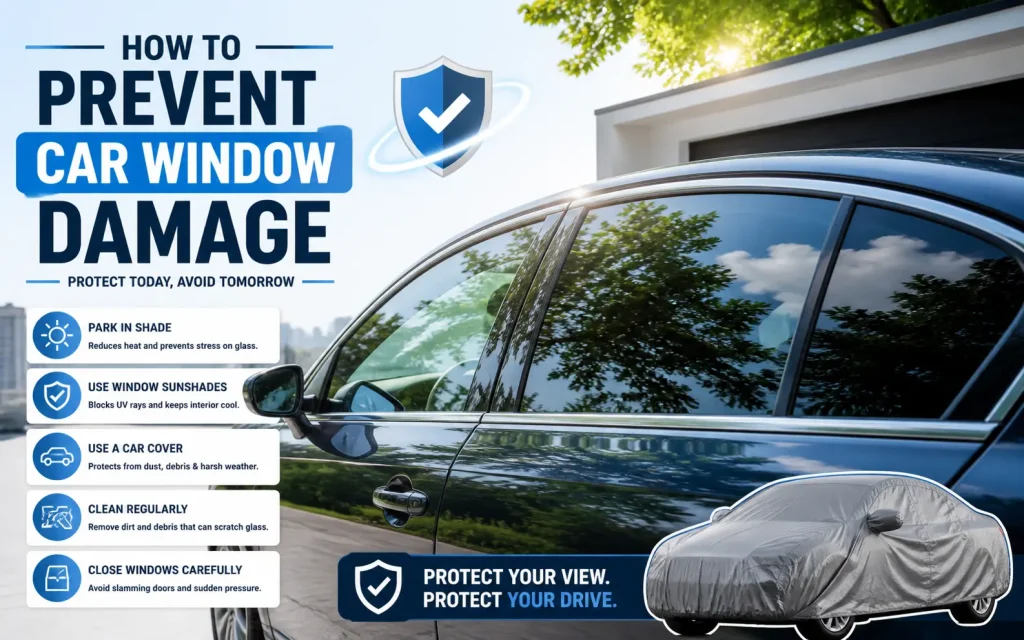
You can’t avoid every rock on the highway — but you can dramatically reduce your risk with a few smart habits.
- Increase Following Distance
Most windshield chips come from debris kicked up by the car ahead. Keep at least 3–4 seconds of following distance, especially behind trucks. - Avoid Gravel Roads When Possible
Construction zones and unpaved roads are the primary source of chip-causing projectiles. Slow down if you must drive through them. - Avoid Sudden Temperature Shocks
Pouring hot water on a frozen windshield or blasting AC on sun-baked glass causes stress cracks. Defrost gradually. - Replace Wipers Regularly
Worn wiper blades allow the metal arm to contact the glass, scratching and weakening it over time. Replace every 6–12 months. - Park in Shade or Covered Areas
UV exposure and thermal cycling weaken windshield adhesive over time. Falling debris (branches, hail) hits uncovered cars hardest. - Consider a Windshield Protection Film
Clear urethane protection film (similar to paint protection film) can absorb minor impacts without the glass cracking. More common on high-end vehicles.
Clean Your Windshield Correctly
Use an ammonia-free glass cleaner and soft microfiber cloths. Ammonia-based products (like original Windex) can degrade window tint films and damage rubber seals around the glass. Micro-pits that build up from years of airborne particles are not repairable — prevention through regular cleaning is the only solution.
Your Post-Repair Inspection Checklis
Whether you did a DIY repair or used a professional shop, always run this inspection before considering the job done.
- Glass sits flush with the car body — no protruding edges
- Consistent, even gap between glass and body on all sides
- Molding (if used) lies flat with no visible bumps or lifted sections
- No air whistling or wind noise at highway speeds
- No water leaks — test with a low-pressure hose if possible (not a car wash jet)
- Defroster lines work (for rear glass) — test with defrost on after 24 hours
- Repaired area has no cloudy residue or visible distortion in sunlight
- ADAS features have been tested and confirmed working (lane assist, AEB, etc.)
- Written warranty received and stored safely
- Adhesive has had the recommended cure time before driving at highway speeds
Test the Optical Quality
Look through the repaired area at a checkerboard or graph-paper pattern held perpendicular to the glass. Significant waviness or ripple means the glass quality is poor and worth flagging with the shop.
Frequently Asked Questions
Can I drive with a cracked car window?
It depends on the crack’s location and size. A small chip away from your sightline is usually drivable temporarily. A crack in your direct line of sight is illegal in many states and genuinely dangerous. Any crack longer than 6 inches should be addressed before highway driving. Edge cracks in the windshield should be fixed the same day — they spread rapidly and compromise structural integrity.
How long does a professional windshield repair or replacement take?
Chip repair takes 30–45 minutes. Full windshield replacement takes 60–90 minutes in the shop, but the urethane adhesive requires a minimum 30-minute drive-away time and a full 24–48 hours to reach full strength. During this time, avoid high-speed driving, car washes, and slamming doors.
Will my insurance rate go up if I file a glass claim?
Comprehensive glass claims generally do not raise your insurance premium because they are classified as non-fault incidents. However, filing multiple comprehensive claims in a short period (typically 2–3 within 3 years) could trigger a rate review with some insurers. Ask your agent before filing.
Is OEM glass worth the extra cost?
For most standard vehicles, high-quality OEE (Original Equipment Equivalent) glass from certified suppliers is perfectly acceptable. For vehicles with head-up displays (HUD), heated windshields, or complex ADAS camera systems, OEM glass is strongly recommended — these features may not function correctly with aftermarket glass.
Can a repaired chip or crack spread again after being fixed?
A properly repaired chip has very little risk of spreading further — the resin fills the void and bonds the glass. However, a repaired area is not as strong as undamaged glass, and a new direct impact to the same spot could cause new damage. A poor-quality repair that leaves air voids can still spread under thermal stress.
My side window shattered. Can I fix it myself temporarily?
You can use heavy-duty clear plastic sheeting or a purpose-made window cover kit as a temporary fix to keep out weather and secure the vehicle. This is not a permanent solution — tempered glass cannot be repaired, and a broken side window leaves your car unsecured. Get it replaced within 1–2 days. In the meantime, remove any remaining glass cubes carefully using gloves and a vacuum.
What’s the difference between laminated and tempered glass?
Laminated glass (windshield) has a plastic interlayer that holds it together when broken — it cracks but stays in one piece and can often be repaired. Tempered glass (side and rear windows) is heat-treated to be 4–5x stronger than regular glass, but when it breaks, it shatters into thousands of small cubes. Tempered glass cannot be repaired — it must be replaced entirely.
How do I find a reputable auto glass shop?
Look for AGSC (Auto Glass Safety Council) member companies and certified technicians. Check Google Reviews for recent feedback on quality and warranty follow-through. Ask the shop what glass brand they use and whether ADAS calibration is included. AAA-Approved Auto Glass facilities and major chains (like Safelite) have standardized quality controls, but many excellent independent shops exist too.
