
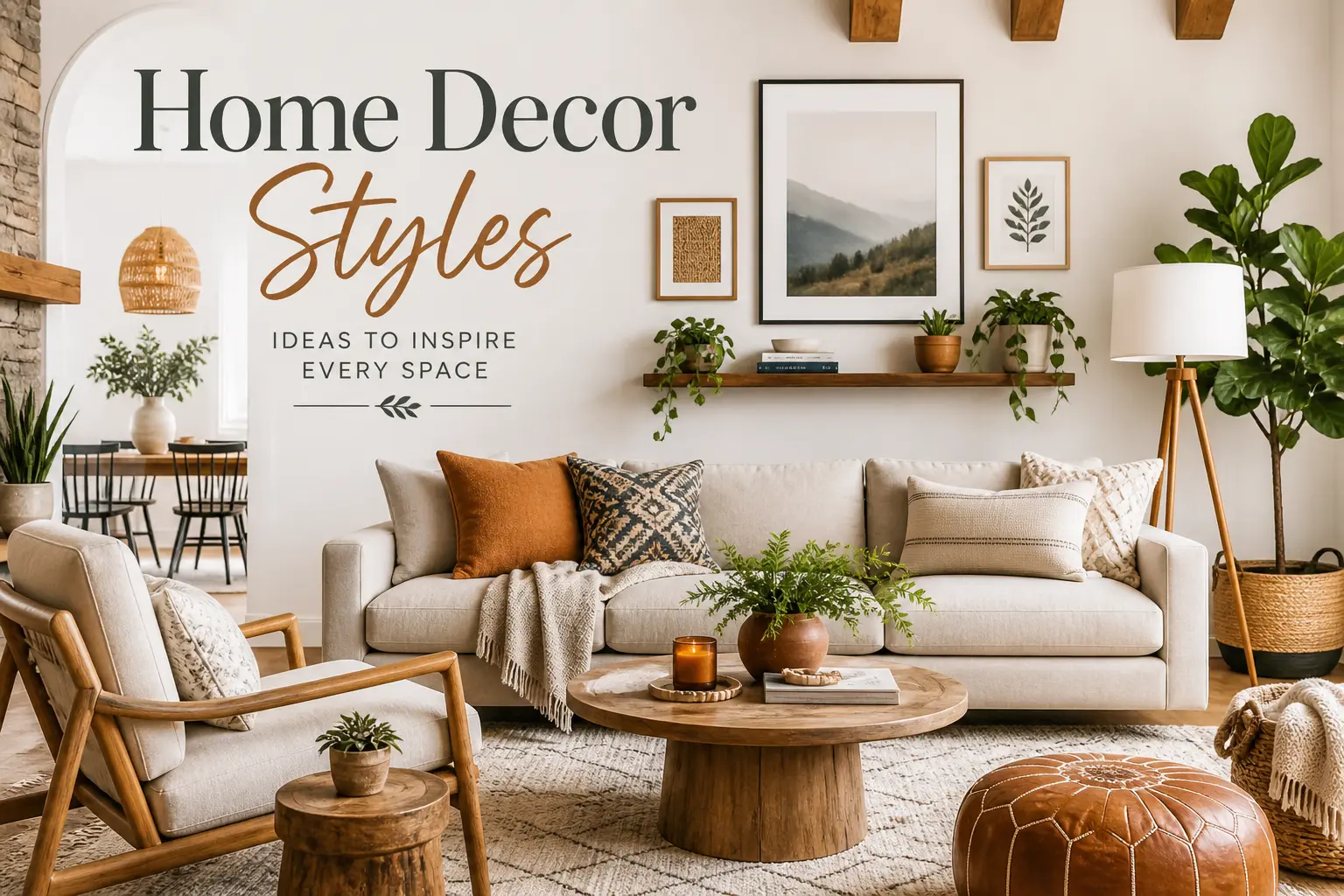
Walk into any home and you feel something. Maybe it’s calm. Maybe it’s energy. Maybe it’s warmth. That feeling isn’t an accident — it’s the result of intentional style choices working together behind the scenes.
The problem most people face isn’t a lack of taste. It’s a lack of vocabulary. When you don’t know the name of a style, you can’t search for it, shop for it, or explain it to a designer. And when you can’t define what you love, decorating feels random.
This guide fixes that. It covers all the major home decor styles — what each one looks like, how it feels to live in it, what makes it different from its closest neighbors, and how to start making it your own. Plus, at the end, you’ll find something most style guides skip entirely: advice on how to mix styles without making your home look confused.
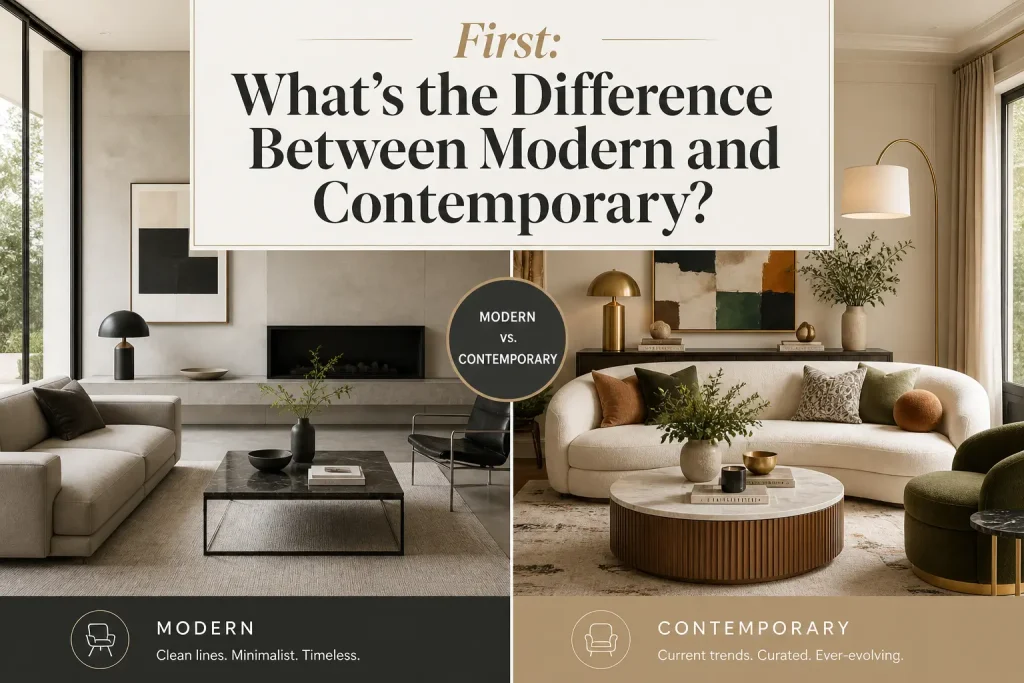
First: What’s the Difference Between Modern and Contemporary?
Before anything else, let’s settle the most common confusion in home decor.
Modern refers to a specific design movement — it emerged in the early 20th century and is defined by clean lines, minimal ornamentation, functional furniture, and a neutral palette. It’s a historical style, not a current trend. When designers say “modern,” they mean this.
Contemporary is not a specific style at all. It’s a catch-all term for whatever is popular right now. Japandi, grandmillennial, biophilic design, and organic modern are all contemporary in the sense that they’re trending today. A home styled in 2026 can be contemporary without being “modern.”
Knowing this distinction will save you a lot of confusion at furniture stores and on design Pinterest boards.
The 14 Most Popular Home Decor Styles, Explained
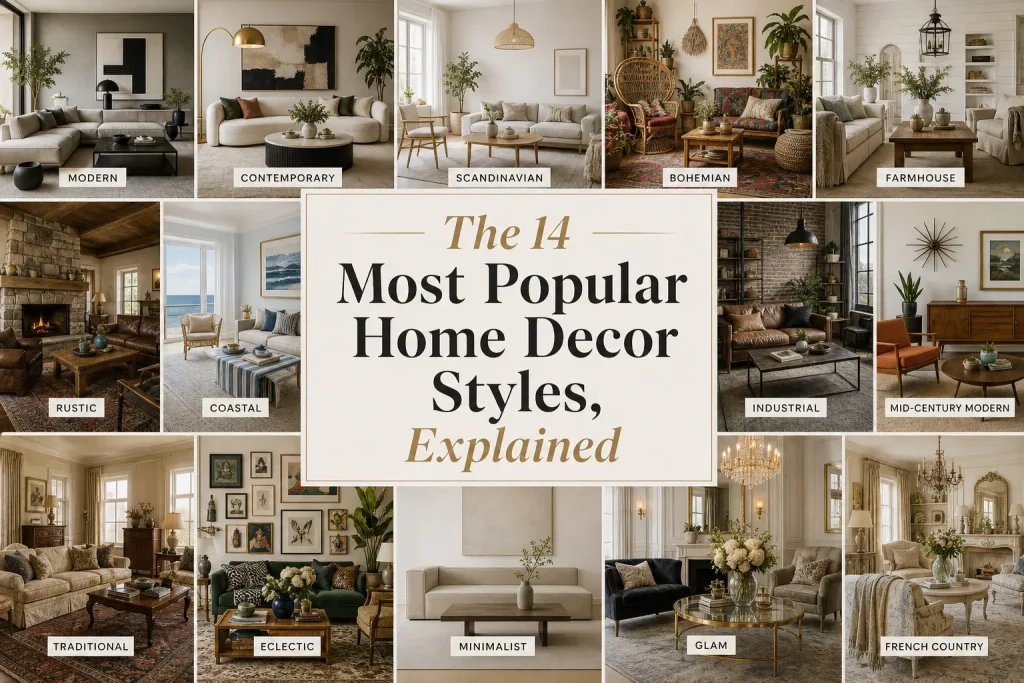
1. Modern
The vibe: Clean, purposeful, and quiet.
Modern design strips everything back to its essentials. You won’t find elaborate ornamentation, busy patterns, or decorative excess. Instead, you’ll find:
- Strong horizontal and vertical lines
- Neutral color palette — whites, blacks, grays, and warm beiges
- Furniture with low profiles and unadorned surfaces
- Materials like glass, steel, and concrete
- Intentional negative space — what’s not in the room matters as much as what is
Good for: People who hate clutter and feel most at peace in quiet, structured spaces. Also works exceptionally well in smaller homes where visual simplicity makes rooms feel larger.
The common mistake: Stripping away so much that the space feels cold or sterile. Add warmth through natural wood accents, a single textured rug, or a few carefully chosen plants.
2. Contemporary
The vibe: Current, fluid, and evolving.
Because contemporary design reflects what’s trending now, it tends to sit at the intersection of comfort and polish. In 2026, contemporary homes often feature:
- Curved furniture and organic shapes (the “soft modernity” trend)
- Warm, earthy neutrals — terracotta, warm white, mushroom, sage
- Bold accent colors used sparingly
- A mix of textures: bouclé, linen, marble, and wood together
- Statement lighting as a focal point
Good for: People who like to refresh their decor every few years and enjoy staying engaged with design trends.
The key distinction from modern: Contemporary bends the “rules.” Curves are welcome. Warmth is the goal.
3. Scandinavian (Scandi)
The vibe: Airy, cozy, and effortlessly livable.
Born in Denmark, Norway, Sweden, and Finland — countries with long, dark winters — Scandinavian design is built around the idea of making interiors feel bright and warm even when the world outside is gray. Its core principles:
- Light wood tones (pine, ash, birch)
- White, gray, and soft beige color palette
- Minimal furniture with excellent craftsmanship
- Cozy textiles — chunky knit throws, sheepskin rugs, linen cushions
- Natural light as a design feature: large windows, mirrors, and light-bouncing surfaces
The Danish concept of hygge (pronounced “hoo-guh”) — creating warmth, coziness, and contentment — is the spiritual heart of this style.
Good for: Small spaces, people who want minimalism but not coldness, and anyone who values both beauty and function in equal measure.
Don’t confuse it with minimalism: Scandi has warmth and softness that pure minimalism deliberately avoids.
4. Minimalist
The vibe: Intentional, calm, and radically edited.
Minimalism takes the “less is more” principle further than any other style. Every object in a minimalist home must earn its place. The result is a space that feels almost meditative.
- Monochromatic or near-monochromatic color palette
- Only essential furniture, positioned with precision
- No decorative clutter — no collections, no knick-knacks
- Hidden storage to keep surfaces completely clear
- Materials that reward close attention: raw concrete, polished stone, handmade ceramics
Good for: People who feel anxious in cluttered spaces and find visual quiet genuinely restful. Also highly practical — with fewer objects, cleaning is faster and easier.
The misconception: Minimalism isn’t about being cold or bare. A thoughtfully edited space can feel deeply personal and warm.
5. Traditional
The vibe: Classic, refined, and reassuringly familiar.
Traditional design draws from 18th and 19th century European aesthetics — think English manor houses and French country estates, brought indoors. It values symmetry, craftsmanship, and layered richness.
- Rich woods: mahogany, cherry, walnut, and oak
- Jewel tones and deep neutrals: navy, burgundy, hunter green, chocolate brown
- Ornate furniture legs, carved details, and tufted upholstery
- Formal arrangements — matching pairs of chairs, lamps, and side tables
- Patterned textiles: florals, plaids, damasks, and stripes
- Antiques or antique-inspired pieces
Good for: People who find comfort in classic, well-established aesthetics and want a home that feels timeless rather than trendy.
6. Transitional
The vibe: Balanced, elegant, and quietly confident.
Transitional design is for people who love elements from both traditional and modern homes but don’t want to commit fully to either. It’s the most livable middle ground in home decor.
- Classic furniture silhouettes updated with simpler lines
- Neutral color palette with occasional warm accents
- A mix of old and new: a traditional sofa with modern side tables, for example
- Minimal accessories — just enough to feel warm, not so many it feels cluttered
- Rugs and throw pillows as the primary decorative tools
Good for: People who want a space that appeals to a wide range of tastes — ideal for families with differing preferences, and excellent for resale value.
The key to getting it right: Commit to a consistent color thread. Transitional spaces look polished when the palette is cohesive, even when the furniture styles vary.
7. Industrial
The vibe: Raw, urban, and honest.
Industrial design began in the 1960s when artists converted abandoned factories and warehouses into living spaces. The style celebrates the beauty of raw, unfinished materials — the kind that would normally be hidden behind drywall.
- Exposed brick walls, concrete floors, and visible ductwork
- Metal: steel beams, iron pipe shelves, copper hardware
- Edison bulb lighting — warm, amber, and utilitarian
- Salvaged and reclaimed wood
- Minimal soft furnishings, though leather and linen appear frequently
- High ceilings and large windows where possible
Good for: Urban apartments, loft-style spaces, and people who appreciate authenticity and character over polish.
Soften it: Industrial spaces can feel harsh if taken too literally. Add warmth with a chunky wool rug, leather chairs, and a few potted plants.
8. Farmhouse and Modern Farmhouse
The vibe: Warm, welcoming, and full of lived-in charm.
Classic farmhouse design is rooted in American rural history — sturdy furniture, natural materials, and practical comfort. Modern farmhouse (popularized by Joanna Gaines and HGTV’s Fixer Upper) takes those elements and pairs them with cleaner, more contemporary lines.
Classic farmhouse features:
- Reclaimed wood, aged metals, and time-worn finishes
- Neutral palette: creamy whites, warm beiges, and soft grays
- Apron-front sinks, shiplap walls, and barn doors
- Practical, multi-purpose furniture
Modern farmhouse updates add:
- Open-concept layouts with clean transitions
- Wide plank floors and sleek matte fixtures
- A more edited approach — less “country kitchen” and more “sophisticated casual”
Good for: Families who want a cozy, approachable home that still feels design-intentional.
9. Bohemian (Boho)
The vibe: Free-spirited, layered, and gloriously rule-free.
Bohemian style originated in 19th century Paris among artists, writers, and nomads who valued creativity over convention. It remains the most individualistic home decor style — there is no single “right” way to do boho.
- Layered textiles: rugs on rugs, throw pillows, tapestries, macramé
- Global influences: Moroccan lanterns, Indian block prints, Turkish kilims, Ugandan baskets
- Jewel tones mixed with earthy neutrals
- Vintage and thrifted finds alongside handmade pieces
- Abundant plants
- Personal collections and meaningful objects on display
Good for: Creative people who want their home to tell a story and show their personality — rather than following any prescribed set of rules.
Pro tip: The secret to cohesive boho is a consistent color palette. You can mix patterns, textures, and eras freely — just anchor everything in a family of related colors.
10. Coastal / Beach
The vibe: Relaxed, breezy, and vacation-ready.
Important distinction: coastal is NOT nautical. You won’t find anchors, ship wheels, or “Ahoy!” signs in a well-designed coastal home. Instead, coastal design captures the feeling of a beautiful beach day — light, air, and calm.
- Palette of soft blues, warm whites, sandy neutrals, and occasional coral or sea glass green
- Natural materials: rattan, jute, linen, wicker, and light woods
- Breezy window treatments that let in maximum light
- Organic shapes inspired by shells, waves, and driftwood
- Simple, uncluttered rooms that feel easy to breathe in
Good for: Anyone who feels most at peace near water — and anyone who wants their home to feel like a year-round retreat, regardless of where they actually live.
11. Art Deco
The vibe: Glamorous, geometric, and unapologetically luxurious.
Art Deco emerged in 1920s Paris and reached its peak during the Jazz Age. It’s a style that says “I’ve arrived” — bold, elegant, and rich with detail.
- Bold geometric patterns: chevrons, sunbursts, and stepped forms
- Luxurious materials: marble, lacquer, gold leaf, velvet, and mirror
- Rich color palette: black, gold, emerald, royal blue, and deep red
- Symmetrical arrangements and dramatic focal points
- Statement lighting: chandeliers, sconces, and sculptural fixtures
Good for: People who love drama and glamour, and want their home to feel like a 1920s penthouse. Also works beautifully in small doses — an Art Deco mirror or light fixture can elevate even a neutral, minimal room.
12. Mid-Century Modern (MCM)
The vibe: Functional, iconic, and timelessly cool.
Mid-century modern spans the design period from roughly 1945 to 1975. It was defined by a belief that good design should be accessible, functional, and beautiful simultaneously — without excess ornamentation.
- Clean lines with organic, curved forms (think Eames chairs)
- Natural wood tones: teak, walnut, and rosewood
- Bold accent colors: mustard yellow, burnt orange, avocado green, and warm red
- Mixed materials: wood with chrome legs, vinyl with wooden frames
- Low-profile, floor-hugging furniture
- Statement pieces that function as sculpture
Good for: People who want a home with genuine design heritage — MCM pieces are among the most consistently beautiful and well-made in furniture history.
13. Japandi
The vibe: Serene, purposeful, and deeply calming.
Japandi is a hybrid of Japanese and Scandinavian design philosophies — two styles that, despite their geographic distance, share an extraordinary amount in common. Both prize simplicity, natural materials, craftsmanship, and the beauty found in imperfection.
- Warm neutrals: warm white, clay, sand, charcoal, and sage
- Natural materials: light wood, bamboo, linen, stone, and ceramic
- Wabi-sabi philosophy: embracing imperfection and the beauty of things that age gracefully
- Minimal furniture, each piece carefully chosen and well-made
- Low, grounded furniture arrangements
- Quiet color moments: a single clay vase, a stone bowl, one architectural plant
Good for: People who find both Scandinavian and minimalist spaces appealing but want a sense of warmth and spirit that pure minimalism sometimes lacks.
The fastest-growing distinction from Scandi: Japandi tends warmer, darker, and more textural. Where Scandi is bright and airy, Japandi is calm and grounded.
14. Maximalist / Eclectic
The vibe: Bold, collected, and confidently “more.”
Maximalism is the deliberate opposite of minimalism. It says: more pattern, more color, more texture, more art. Done well, a maximalist home feels like a museum of a fascinating life lived fully.
- Bold, saturated colors used liberally
- Layered patterns — florals with stripes with geometrics
- Collected objects: art, books, ceramics, sculpture, and travel mementos
- Multiple furniture styles coexisting in one room
- Gallery walls, statement wallpaper, and sculptural lighting
Eclectic is a sister style — also mixing freely, but with a slightly more curated, polished approach. Think: every piece is intentional; nothing is there by accident.
Good for: People with big personalities, a love of collecting, and no patience for the idea that a home should play it safe.
The rule within the rulelessness: Commit to a color palette. In maximalist and eclectic spaces, a consistent color thread is what holds all the variety together and keeps it from feeling chaotic.
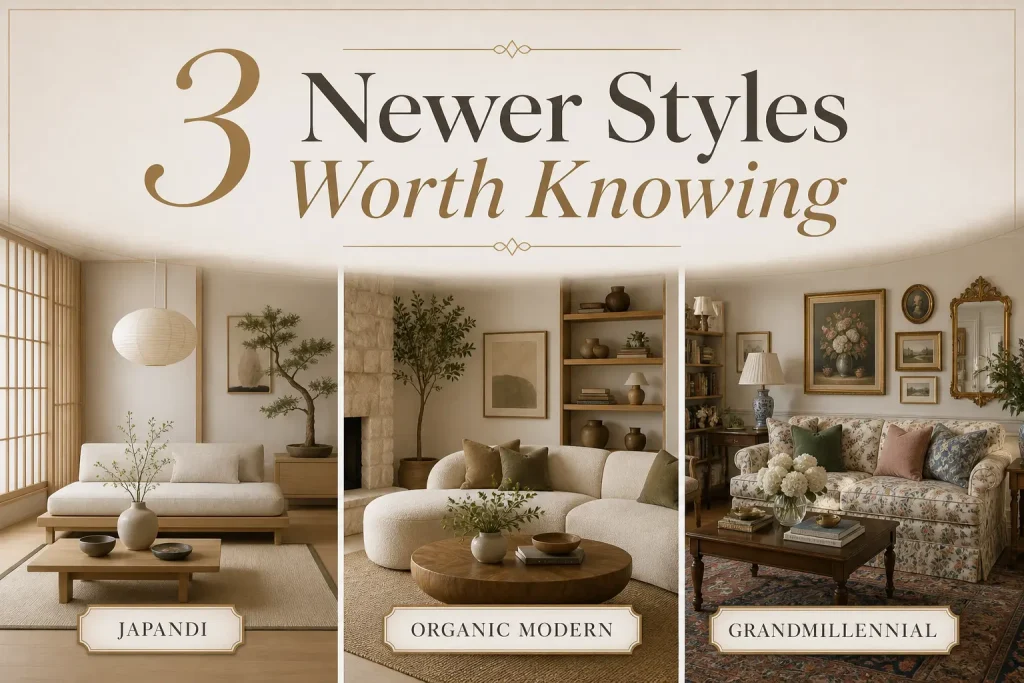
3 Newer Styles Worth Knowing
Biophilic Design
Centered on connecting indoor spaces to the natural world — not just with plants, but with natural light, organic materials, living walls, water features, and earthy textures. It’s backed by research: natural elements in interiors measurably reduce stress and improve focus. Biophilic design is less a “style” and more a design philosophy that works within any other style.
Organic Modern
A warm, evolved version of modern design that replaces hard edges and cold materials with soft curves, natural textures, and earthy tones. Think: a cream bouclé sofa, a live-edge coffee table, a jute rug, and a single dramatic fiddle-leaf fig. Organic modern is one of the most searched and most achievable design directions for 2026.
Grandmillennial
A tongue-in-cheek name for a style that mixes traditional, “grandma” aesthetics — chintz, fringe, needlepoint, ruffles, china collections — with a modern, confident sensibility. It’s the antithesis of minimalism, and it’s having a genuine cultural moment among younger homeowners who grew up in traditionally decorated homes and are reclaiming that warmth.
What Your Competitors’ Guides Miss: How to Mix Styles
Almost every home decor style guide tells you what each style looks like. Very few tell you how to combine them — which is what most real people actually do.
Here’s the truth: virtually nobody lives in a “pure” version of any single style. Your home is transitional with a farmhouse kitchen. Or it’s modern with bohemian bedroom touches. Or it’s coastal-inspired with mid-century furniture. And that’s not a problem — that’s personality.
The 3 Rules for Mixing Home Decor Styles Successfully
Rule 1: Choose a dominant style and let others be accents.
Pick one style that defines the overall feel of your space (around 70% of what you see). Then layer in elements of 1–2 other styles for interest and personality. The dominant style anchors everything; the accents add depth.
Rule 2: Create a consistent color thread.
You can mix a farmhouse wooden table with Scandinavian chairs and a boho rug — as long as they share a color story. When your eye can follow a connecting color through the whole room, the space reads as intentional, not confused.
Rule 3: Respect the “weight” of your furniture.
Heavy, ornate traditional furniture doesn’t sit comfortably alongside very sparse, ultra-minimal pieces. But it can live beautifully with industrial pieces (both are heavy and substantial) or with transitional pieces (both value craftsmanship). Match furniture by visual weight, not just by style label.
How to Find Your Personal Home Decor Style
If you’re still not sure where you land, here’s a practical approach:
Step 1: Start with how you want to feel.
Do you want your home to feel calm? Energetic? Warm? Curated? Playful? The emotional goal tells you more about your style than any quiz.
Step 2: Look for patterns in what you save.
Go through your Pinterest boards, Instagram saves, and any magazine pages you’ve torn out. Don’t analyze — just look. What keeps appearing? Clean lines, or lots of layers? Neutral tones, or bold color? Natural materials, or polished surfaces?
Step 3: Name the two or three styles you’re drawn to.
Use this guide to put names to the patterns you noticed. Chances are, you’ll identify one dominant style and one or two that show up as accents.
Step 4: Start small.
You don’t need to redecorate a whole room to explore a style. Start with one pillow, one lamp, one rug. Live with it for a few weeks. If it still feels right, build outward.
Step 5: Trust your instincts over trends.
Design trends come and go. The styles that age best are the ones that reflect who you actually are — not what was popular on Instagram this season.
Quick Style Reference: At a Glance
| Style | Key Colors | Key Materials | Best For |
| Modern | Neutrals, black, white | Steel, glass, concrete | Minimalists who love structure |
| Contemporary | Warm earthy neutrals | Bouclé, marble, wood | Trend-aware decorators |
| Scandinavian | White, gray, soft beige | Light wood, linen, wool | Small spaces, cozy minimalism |
| Minimalist | Monochromatic | Stone, ceramics, raw wood | Clutter-haters, peace-seekers |
| Traditional | Rich jewel tones, brown | Mahogany, velvet, brass | Classic elegance lovers |
| Transitional | Soft neutrals | Mixed old and new | Broad-appeal, family homes |
| Industrial | Gray, black, warm brown | Brick, steel, reclaimed wood | Loft spaces, urban homes |
| Farmhouse | Cream, warm white, gray | Shiplap, reclaimed wood | Cozy family homes |
| Bohemian | Jewel tones, earthy mix | Rattan, macramé, textiles | Creative, free spirits |
| Coastal | Soft blue, white, sand | Rattan, linen, wicker | Beach-inspired calm |
| Art Deco | Black, gold, jewel tones | Marble, velvet, mirror | Glamour and drama lovers |
| Mid-Century Modern | Warm tones, bold accents | Teak, walnut, vinyl | Design purists |
| Japandi | Warm white, charcoal, clay | Bamboo, linen, ceramic | Serenity seekers |
| Maximalist | Bold and saturated | Everything, layered | Collectors and bold personalities |
Final Thought
Your home doesn’t need to be a textbook example of any single style. The best-decorated homes are the ones that feel genuinely inhabited — where every choice, even the imperfect ones, tells something true about the person who lives there.
Use these styles as a vocabulary, not a rulebook. Name what you love, understand why you love it, and then make it your own.
