
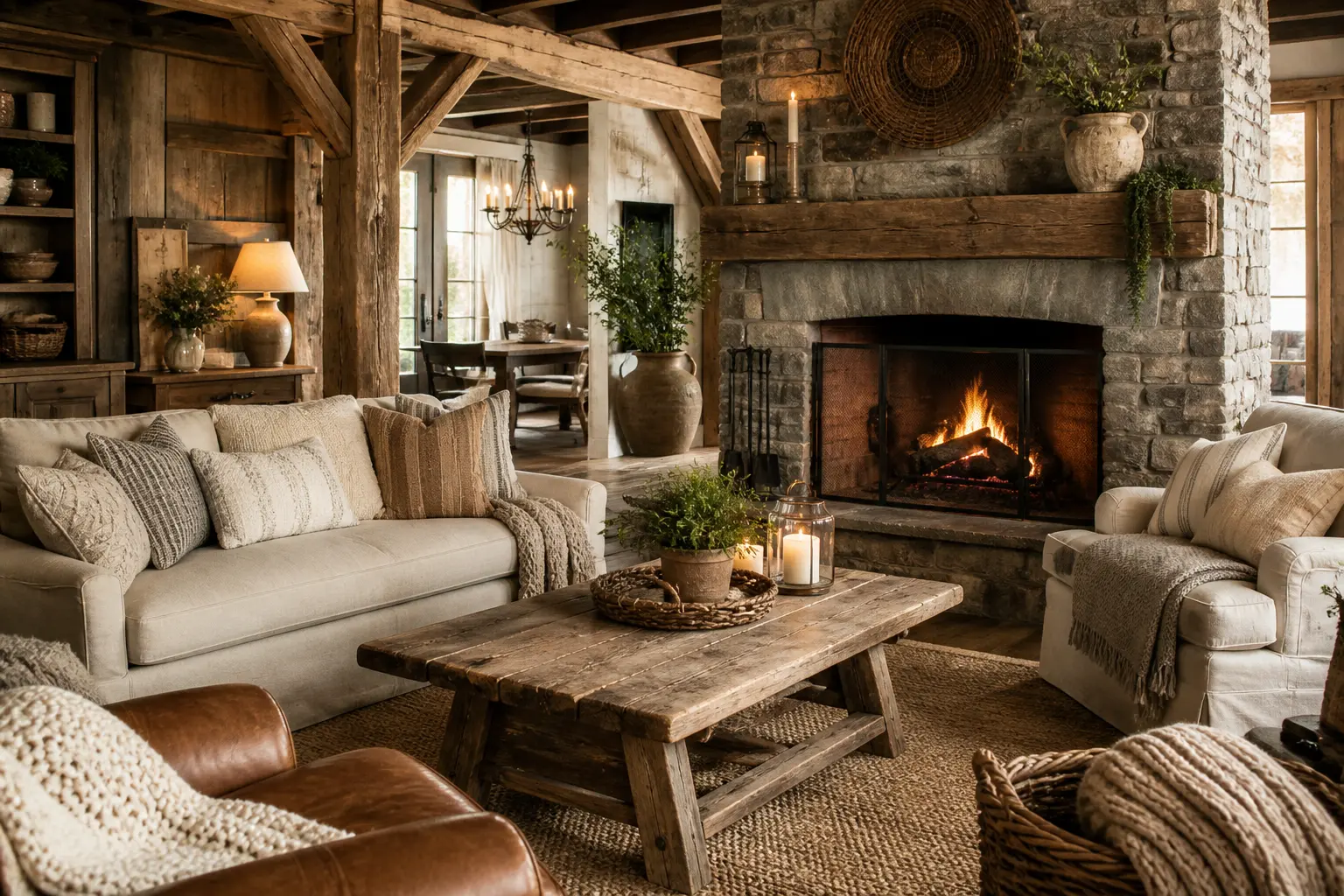
You already know the feeling. You walk into a room, and something in you just relaxes. The air feels warmer. The space feels lived-in but beautiful. Nothing looks like it came off a showroom floor.
That feeling has a name: rustic.
But here’s the problem most guides don’t address – “rustic” has become one of the most misunderstood, over-clichéd words in home decor. It gets confused with log cabin kitsch, stuffed deer heads, and mass-produced barn door hardware from big-box stores. None of that is what rustic truly means.
This guide gives you the real thing – what rustic home decor actually is, what makes it work, how to do it room by room, what to avoid, and how 2026’s freshest design trends are making it better than ever.
What Is Rustic Home Decor, Really?
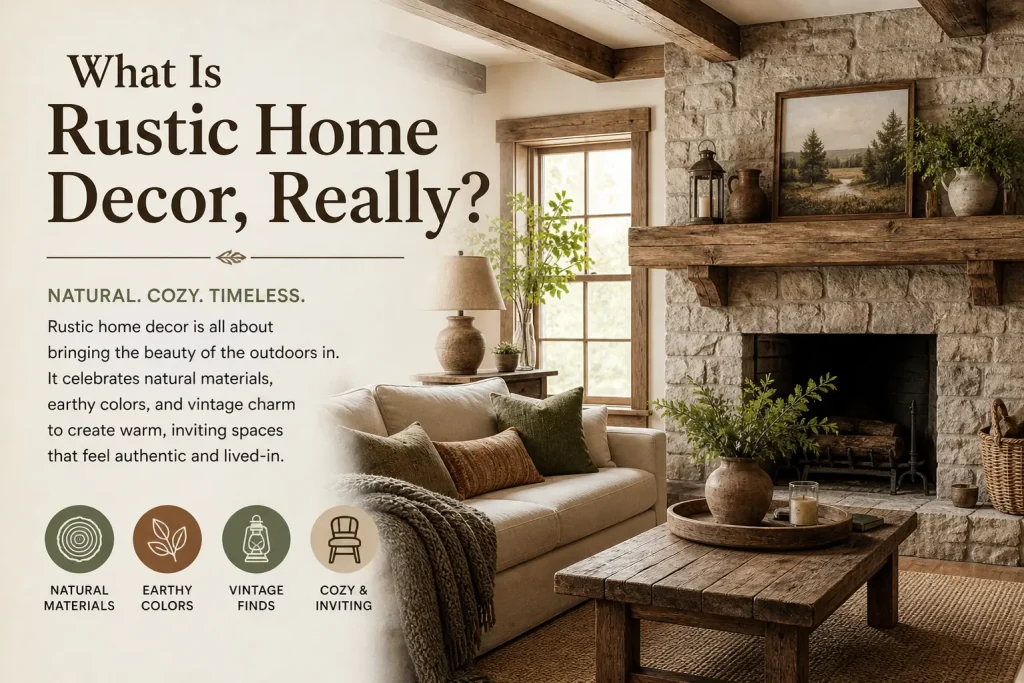
Rustic home decor is a design philosophy built around three core ideas:
- Celebrating natural materials in their raw, honest state
- Valuing handcrafted quality over machine-made perfection
- Creating spaces that feel warm, grounded, and genuinely lived-in
At its heart, rustic decor is the opposite of pretentious. There are no ornate centerpieces, no glossy lacquered finishes, no perfectly matched sets. Instead, you’ll find wood with visible grain, stone with rough edges, textiles made by hand, and objects that look like they’ve earned their place in the room.
Here’s the key distinction most people miss: Rustic is not about age or damage. It’s about authenticity. A brand-new hand-thrown ceramic bowl is just as rustic as an antique wooden crate – because both celebrate material, craft, and honesty.
The 6 Essential Elements of Rustic Home Decor
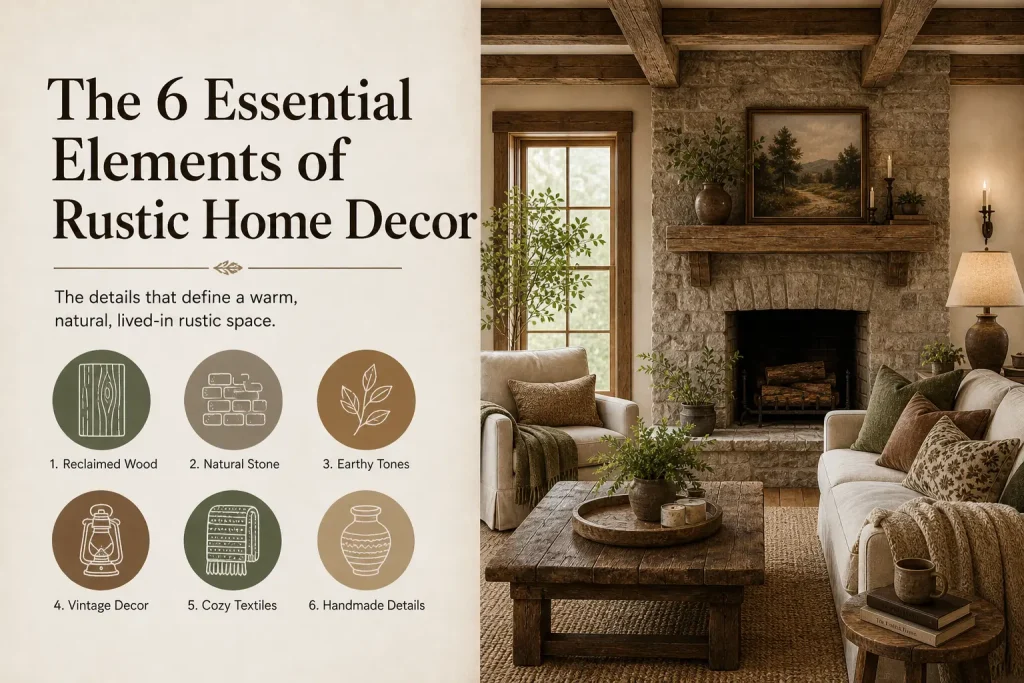
1. Natural Wood — The Foundation of Everything
Wood is the undisputed cornerstone of rustic design. But not just any wood — the right kind, used the right way.
What to look for:
- Visible grain, knots, and natural imperfections (not hidden, but celebrated)
- Reclaimed or salvaged wood, which carries a sense of history
- Rich species like walnut, oak, teak, and Douglas fir for warmth and depth
- Tambour surfaces — narrow, repeating rounded slats that mimic log cabin texture on a smaller, more modern scale (a major 2026 trend)
Where to use it: Dining tables, ceiling beams, floating shelves, headboards, flooring, and side tables.
Avoid: Over-polished, lacquered, or artificially distressed wood. Rustic wood should look like it was shaped by someone’s hands, not a factory.
2. Stone, Brick, and Raw Texture
Raw stone and exposed brick bring visual weight and permanence to a rustic space. They’re the materials that say this room has roots.
- Exposed brick walls work beautifully as accent walls, especially behind a fireplace or in a kitchen
- Natural stone flooring or countertops add character that only improves with age
- Limewash plaster, clay finishes, and natural plaster walls are a major 2026 trend, offering organic texture without needing actual stone
- For modern rustic spaces, rough-cut stone used sparingly (a single stone fireplace, a stone sink basin) adds drama without overwhelm
3. Handcrafted and Artisanal Objects
This is the element most decor guides skip — and it’s arguably the most important one.
Rustic design has always had roots in the Arts and Crafts movement, which pushed back against industrial mass-production and championed the beauty of handmade work. In a rustic home, you’ll find:
- Hand-carved wooden bowls, cutting boards, and furniture
- Hand-thrown ceramic mugs, vases, and dishes
- Hand-forged iron hardware, hooks, and light fixtures
- Hand-woven baskets, rugs, and textiles
These pieces carry visible marks of their making — slight asymmetries, variations in glaze, the weight of real craft. That imperfection is the point. It’s what makes a space feel human.
2026 update: The shift is away from big-box “rustic-look” items toward genuinely artisanal and locally sourced pieces. Flea markets, estate sales, and independent craft markets are your best friends.
4. Earthy, Nature-Inspired Colors
Rustic color palettes draw directly from the natural world — the colors of soil, bark, stone, moss, and dried grain.
The 2026 rustic color palette:
| Category | Colors |
| Foundation Neutrals | Warm white, mushroom, taupe, creamy off-white |
| Grounding Greens | Sage, olive, deep forest green |
| Rich Accents | Terracotta, burnt orange, rust, mahogany, muted burgundy |
| Naturals | Warm brown, charcoal, sand, raw linen |
What’s changing in 2026: Cool grays and stark whites are out. The warmth dial is turning up significantly. Designers are calling for richer, moodier tones — think deep green walls with warm leather furniture, or a terracotta accent wall behind natural wood shelving.
One specific trend worth noting: burgundy red is back as a statement wall finish, particularly in butler’s pantries, reading nooks, and accent spaces.
5. Cozy, Natural Textiles
Textiles are how a rustic space moves from “interesting” to “irresistible.” They soften hard surfaces, add warmth underfoot and overhead, and invite you to actually sit down and stay.
Rustic-right textiles include:
- Chunky knit throws in wool or cotton
- Linen and burlap cushion covers
- Jute and sisal area rugs (layered over wood floors)
- Cowhide and sheepskin accents for texture and character
- Plaid and check patterns in natural fibers
- Woven wall hangings and macramé
Layering is the key technique: A jute rug under a patterned wool rug, a linen throw over a leather sofa, a sheepskin on a wooden chair. Layers create the warmth and depth that single-texture rooms can never achieve.
6. Organic Greenery
Plants are not optional in a rustic home — they’re essential. They bring life, color, and the literal outdoors inside.
Best plants for rustic spaces:
- Fiddle-leaf figs and olive trees for statement height
- Trailing pothos and ivy for shelves and beams
- Eucalyptus and dried botanicals for low-maintenance texture
- Herbs in terracotta pots for kitchens
- Seasonal branches and dried grasses in ceramic vases
Rustic Sub-Styles: Finding Your Version
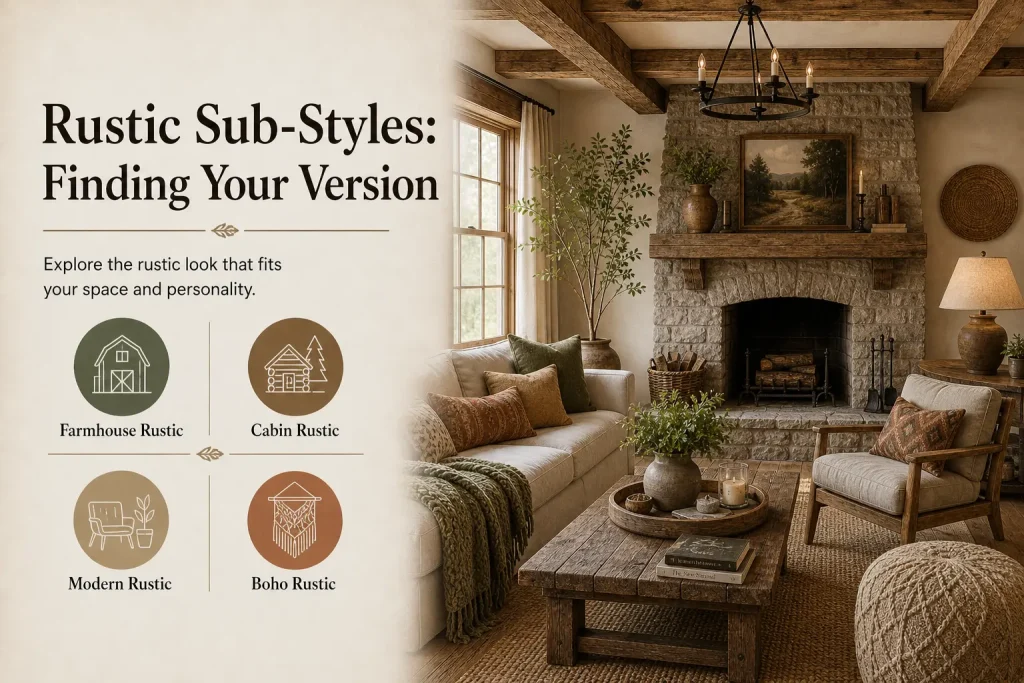
“Rustic” isn’t a single look. It’s a family of related styles. Here’s how the main branches differ:
Classic Rustic
Heavy wood, stone, exposed beams, plaid textiles, and a strong connection to cabin and lodge aesthetics. Rich, dark, and cozy. Best for rural properties, large spaces, and cold climates.
Modern Rustic
The most popular version in 2026. Pairs raw natural materials (wood, stone, linen) with cleaner contemporary lines, minimal clutter, and a lighter palette. Think: reclaimed wood coffee table + sleek white sofa + jute rug. Raw meets refined.
Modern Farmhouse
Grew out of Joanna Gaines-era design and continues to evolve. Shiplap, apron sinks, and barn doors meet open-concept layouts, matte black hardware, and a more edited approach. Brighter and airier than classic rustic.
Rustic Boho
Layers global textiles, Moroccan patterns, and eclectic collected objects over a rustic material foundation. More maximalist, more colorful, and more personal. Great for creatives.
Rustic Industrial
Pairs raw natural materials with exposed metal, concrete floors, and steel-frame windows. Urban lofts and converted warehouses are its natural habitat. Warmed up with leather, wood, and plants to avoid feeling cold.
Rustic Coastal
Replaces dark woods with lighter driftwood tones, adds rattan and wicker, and brings in ocean-inspired blues and sandy neutrals. Perfect for beach homes or anyone wanting rustic warmth without heaviness.
Rustic Home Decor Room by Room
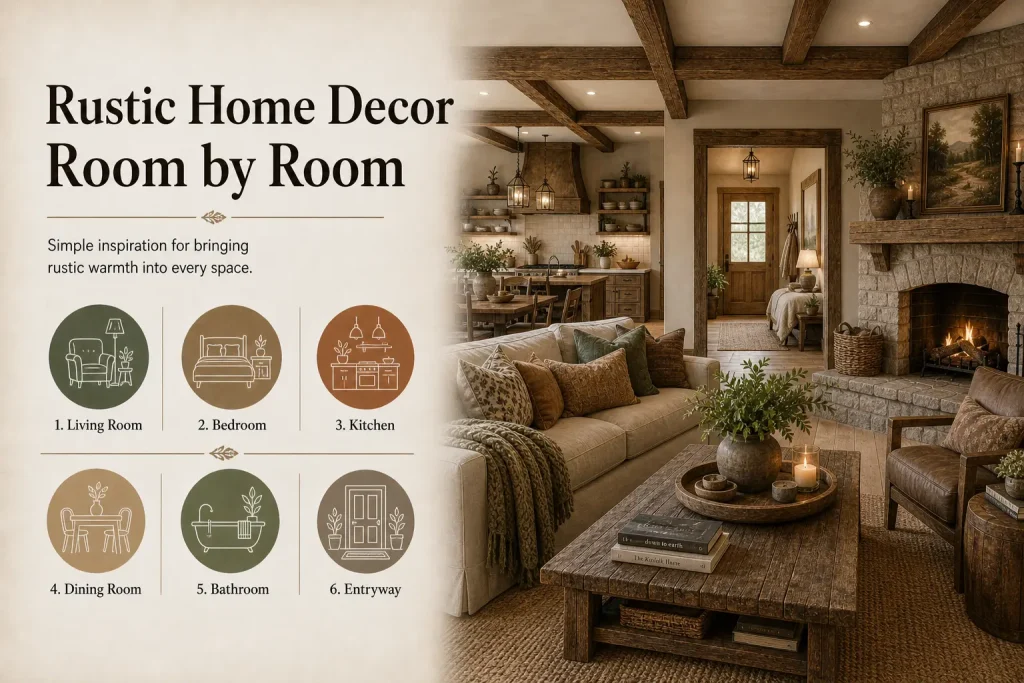
Rustic Living Room
The living room is where rustic design does its best work.
Start here:
- Anchor the room with a natural material rug (jute, sisal, or wool)
- Choose a sofa in linen, leather, or bouclé — all age beautifully
- Add a reclaimed wood coffee table or a live-edge slab
- Layer throw pillows in different textures: velvet, linen, knit
- Add plants for life and a woven basket for storage
- Use a stone or brick fireplace as the focal point if you have one
2026 tip: Deep green walls paired with warm leather furniture and raw wood shelving is one of the most searched living room combinations right now. It creates a cozy, cocoon-like atmosphere that photographs beautifully and feels even better in person.
Rustic Kitchen
The kitchen is where rustic decor feels most naturally at home.
Key elements:
- Open wooden shelving instead of (or mixed with) upper cabinets
- Apron-front farmhouse sink in white porcelain or fireclay
- Butcher block or live-edge wood countertops (or mix with stone)
- Matte black or aged brass hardware throughout
- Terracotta floor tiles or wide-plank wood flooring
- Pendant lights in iron, copper, or rattan above the island
- Herbs growing in terracotta pots on the windowsill
What competitors miss: The English Kitchen trend is surging in 2026 — furniture-style cabinetry with decorative knobs, hooks, and pegs that make the kitchen feel like a room, not an appliance space. It pairs perfectly with rustic sensibilities.
Rustic Bedroom
A rustic bedroom should feel like the coziest place on earth.
How to build it:
- Choose a solid wood bed frame — reclaimed wood, live-edge headboard, or a simple platform in walnut
- Layer bedding: linen sheets, a chunky knit throw, two or three textured pillow covers
- Add a sheepskin or natural fiber rug beside the bed
- Use warm, soft lighting — wall sconces with Edison bulbs, or table lamps with linen shades
- Keep nightstands simple: a wooden stool, a raw-edge slab, or a simple crate
- One or two statement plants finish the space
Avoid: Overhead fluorescent lighting, plastic storage bins visible anywhere, and overly matched “bedroom sets.” Nothing kills rustic warmth faster than a perfectly coordinated suite from a furniture catalog.
Rustic Bathroom
Bathrooms are where small rustic touches make the biggest impact.
Easy upgrades:
- Replace a standard vanity with a reclaimed wood one
- Add open wooden shelving for towels and toiletries
- Use terracotta, stone, or patterned encaustic floor tiles
- Choose matte black or oil-rubbed bronze fixtures
- Hang a woven rattan mirror
- Display hand-thrown soap dishes, wooden soap pumps, and linen hand towels
- Add a small potted plant or a bundle of dried eucalyptus
What’s New in Rustic Decor for 2026
Rustic design is not standing still. Here’s what’s genuinely new this year:
1. Textured walls are replacing plain painted ones. Limewash, natural plaster, clay, and venetian plaster are all trending as alternatives to standard paint. They add depth, warmth, and organic imperfection that flat paint can’t match.
2. Oversized windows are the new fireplace. Large-format windows that flood rustic rooms with natural light and frame outdoor views are becoming as architecturally important as the hearth itself.
3. Curved and organic shapes are entering the mix. Rustic design is softening its edges — literally. Rounded furniture, irregular-shaped mirrors, and organic stone accents are replacing strictly angular, boxy pieces.
4. Animal-inspired textures are back as sophistication. Horn motifs, sculptural antlers, and hair-on-hide accents are being used as refined statement pieces rather than kitschy novelties.
5. Sustainability is now non-negotiable. Reclaimed materials, locally sourced pieces, and natural renewable materials (bamboo, cork, wool, rattan) are the expectation in 2026, not just an option.
6. Statement lighting is the new focal point. A bold chandelier in black iron with brass accents, or oversized pendant lights woven in rattan, can single-handedly transform a room’s character.
How to Mix Rustic with Other Styles
Almost nobody decorates in a pure single style — and rustic is one of the most blendable styles there is. Here’s how to mix it without losing coherence:
Rustic + Modern: Keep the palette light and airy. Use rustic materials (wood, linen, stone) but in modern forms (clean-lined furniture, minimal accessories). The material is rustic; the composition is modern.
Rustic + Scandi: Both styles share natural materials and a love of warmth. The difference is Scandi is brighter and lighter, rustic is darker and more textural. Combine them by keeping walls light but letting furniture and textiles go earthy and warm.
Rustic + Industrial: Both appreciate raw, honest materials — just from different worlds (nature vs. factory). Warm up the metal and concrete with wood, linen, and plants. Cool down the rustic with matte black hardware and steel-frame details.
Rustic + Bohemian: Layer global textiles, vintage finds, and collected objects over a rustic material base. The rustic foundation provides grounding; the boho elements add personality and color.
5 Rustic Decorating Mistakes to Avoid
1. Going too “themed.” A rustic home is not a log cabin museum. The moment your décor feels like a costume — fishing gear on the walls, antler-shaped everything, plaid on every surface — it stops feeling authentic and starts feeling campy.
2. Buying “rustic-look” mass-produced pieces. Fake distressing, plastic “wood” beams, and factory-stamped “vintage” signs are the enemies of real rustic warmth. Imperfection only reads as beautiful when it’s genuine.
3. Forgetting about lighting. Rustic rooms lit by harsh overhead lighting feel cold and institutional. Swap for warm-toned bulbs, layer light sources (floor lamps, table lamps, sconces), and use dimmers wherever possible.
4. Ignoring scale. Rustic furniture tends to be substantial. A chunky reclaimed wood dining table needs chairs with equal visual weight. Don’t mix heavy rustic pieces with very delicate, spindly modern furniture — the visual clash is jarring.
5. Overcrowding surfaces. Rustic doesn’t mean maximalist. In fact, the most beautiful rustic rooms are edited and intentional. One large ceramic vase says more than ten small tchotchkes. Give each object space to breathe.
Where to Find Rustic Home Decor (Without Overpaying)
You don’t need a designer budget to build a beautiful rustic space.
Best sources:
- Estate sales and auctions — the single best place to find genuine antique and reclaimed pieces at fair prices
- Flea markets and vintage markets — hunt for raw wood furniture, ironware, and ceramic pieces
- Local antique shops — better quality control than online, and you can feel the material in person
- Thrift stores — patience pays off, especially for wooden furniture worth refinishing
- Local craftspeople and Etsy makers — for handmade ceramics, wooden objects, and woven textiles
- Architectural salvage yards — for reclaimed wood beams, vintage doors, and original hardware
2026 rule of thumb: One genuine, well-made piece is worth five cheap imitations. Buy less. Buy better. That’s the rustic philosophy applied to shopping.
Quick-Start: 10 Easy Rustic Upgrades You Can Do This Weekend
- Swap metal or plastic curtain rods for wooden ones
- Replace a standard bathroom mirror with a round rattan or reclaimed wood frame
- Add a jute or sisal rug over your existing floor
- Put a chunky knit throw over your sofa or armchair
- Replace cabinet hardware with matte black or aged brass pulls
- Display a cluster of different-sized terracotta pots with plants
- Add a wooden tray to organize items on your coffee table or dresser
- Hang a single large woven wall piece instead of several small frames
- Switch light bulbs to warm-toned (2700K) Edison-style bulbs
- Replace plastic storage bins with wicker or seagrass baskets
Final Thought
The best rustic spaces don’t look decorated — they look inhabited. Every piece has a reason to be there, every material tells a story, and the whole room feels like it grew naturally over time rather than being assembled in a weekend.
That’s the goal. Not a perfectly curated showroom. Not a themed cabin. Just a home that feels honest, warm, and completely, unmistakably yours.
Start with one room. Start with one object. Let the warmth build from there.
