
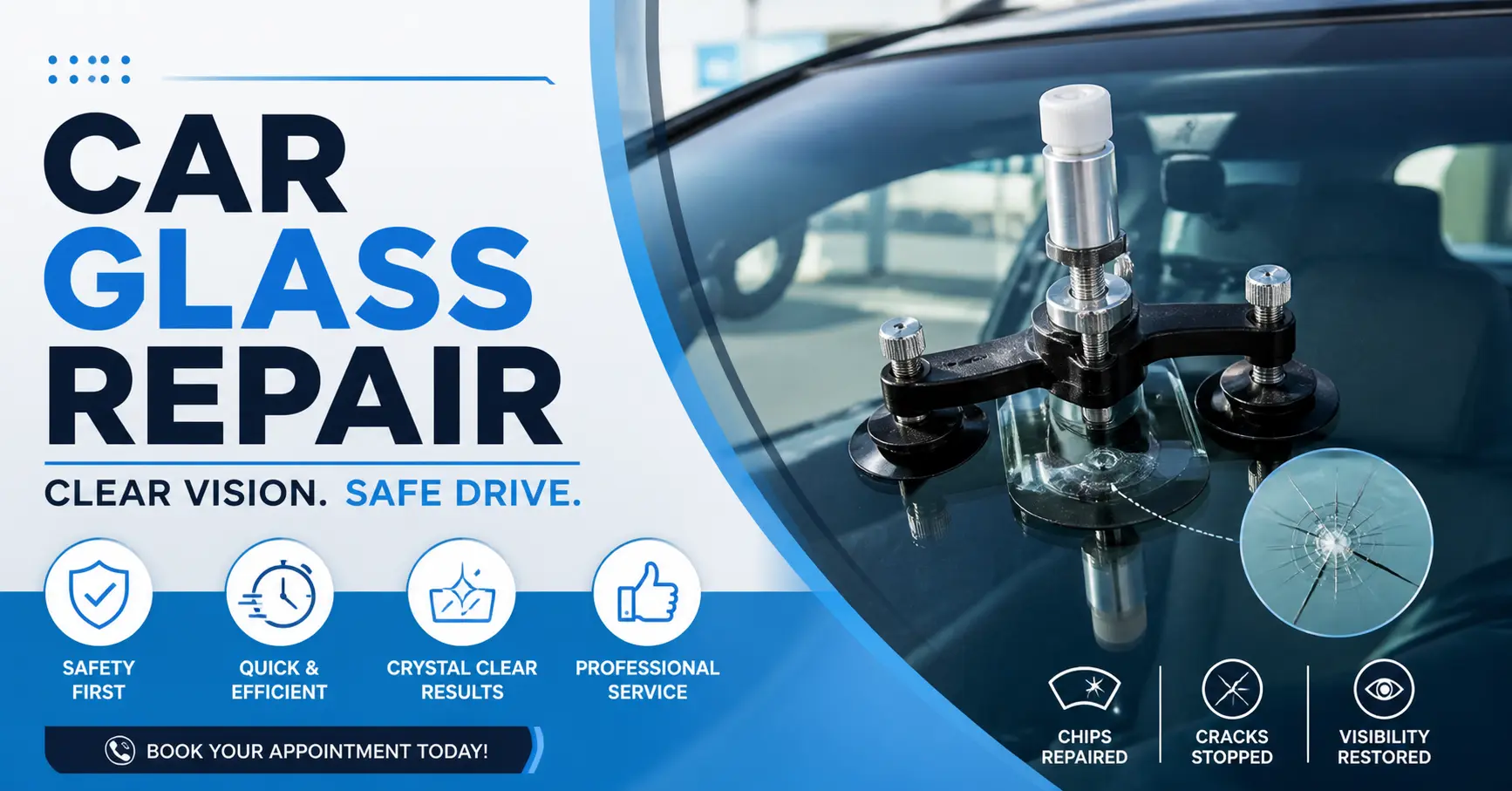
Everything you need to make a smart, confident decision — from a tiny chip to a full windshield replacement.
A small chip in your windshield can turn into a huge crack overnight — especially in cold or hot weather. The good news? Car glass repair is one of the most affordable and fastest auto fixes available. The bad news? Most guides online only scratch the surface (pun intended).
This guide covers everything your competitors’ articles miss: when repair is truly possible, exactly what affects your cost, how to handle insurance claims, the OEM vs. aftermarket debate, ADAS recalibration, and the questions you must ask before booking any service.
What Is Car Glass Repair — And When Is It Enough?
Car glass repair involves injecting a special resin into a chip or crack to restore the glass’s structural integrity and optical clarity. It does not make the damage invisible, but it stops it from spreading and prevents the need for a full replacement.
Repair is possible only when the damage meets specific criteria. Technicians use the following rules of thumb:
- Size: Chips smaller than a quarter (about 1 inch) can usually be repaired. Cracks shorter than 6 inches may also qualify.
- Location: Damage NOT in the driver’s direct line of sight and NOT at the windshield’s edge is a good candidate for repair.
- Depth: Only the outer layer of glass is damaged (windshields are laminated — two layers with a plastic interlayer).
- Age: Older damage that has collected dirt may not bond as effectively with repair resin.
When Repair Is NOT Enough — You Need a Full Replacement:
- The crack is longer than 6 inches
- The damage is directly in front of the driver
- The crack reaches the edge of the windshield
- The inner plastic (PVB) layer is damaged
- The windshield has multiple chips or star-shaped cracks
- Side windows or rear glass are damaged (tempered glass shatters and cannot be repaired)
Repair vs. Replacement: Quick Reference Table
| Damage Type | Repair Possible? | Typical Timeframe |
| Small chip (< 1 inch) | Yes | 20–30 minutes |
| Short crack (< 6 inches) | Yes | 30–45 minutes |
| Long crack (> 6 inches) | No – Replace | 1–3 hours |
| Shattered glass | No – Replace | 1–3 hours |
| Side window crack | No – Replace | 45–90 minutes |
| Rear windshield crack | No – Replace | 1–2 hours |
| Sunroof damage | Case-by-case | 1–2 hours |
Types of Car Glass — And Why It Matters for Repair
Not all car glass is the same, and understanding the difference helps you make smarter decisions:
- Laminated Glass (Windshield): Two layers of glass bonded to a polyvinyl butyral (PVB) plastic layer. This layered design is why windshields can be repaired — the outer layer breaks but the plastic holds it together.
- Tempered Glass (Side & Rear Windows): Heat-treated to shatter into small, harmless pebbles on impact. It cannot be repaired — only replaced.
- Acoustic Glass: Found in premium vehicles. Has an extra sound-dampening layer. Harder to source and more expensive to replace.
- Heated Glass: Contains embedded wires for defrosting. Replacement must preserve these elements, adding complexity and cost.
Real Cost Breakdown: Car Glass Repair vs. Replacement
Here’s what competitors don’t tell you — the price ranges are wide because many variables apply. Here’s a transparent breakdown:
Windshield Chip or Crack Repair
- Typical cost: $50 – $150 out of pocket
- With insurance: $0 (often waived under comprehensive coverage)
- Time: 20–45 minutes
Windshield Replacement
- Standard vehicles: $200 – $500
- Vehicles with ADAS (cameras, sensors): $400 – $1,500+
- Luxury/European vehicles: $800 – $2,000+
- With insurance: You pay your deductible only (usually $100–$500)
Side Window Replacement
- Typical cost: $150 – $400 per window
- Power windows: Add $50 – $200 for motor/regulator inspection
Rear Windshield Replacement
- Typical cost: $200 – $600
- Heated rear glass: Add $50 – $150
ADAS Camera Recalibration (Often Overlooked!)
- Static recalibration: $150 – $300 (done in a controlled shop bay)
- Dynamic recalibration: $250 – $500 (done on a drive)
Many shops bundle this with replacement — always ask if it’s included. Skipping recalibration can disable lane departure warnings, automatic emergency braking, and other critical safety systems.
OEM vs. Aftermarket Glass: The Debate Explained
This is one of the most important decisions you’ll make — and one most repair guides skip entirely.
- OEM Glass (Original Equipment Manufacturer): Made by the same manufacturer as your factory glass. It matches your vehicle’s exact specifications for thickness, tint, and curvature. Best for vehicles with ADAS systems, as it maintains sensor alignment.
- OEM-Equivalent / Dealer Glass: Made by a third-party but built to OEM specs. A good middle ground for most vehicles.
- Aftermarket Glass: Cheaper, but may vary slightly in thickness or tint. May not integrate as precisely with ADAS cameras or rain sensors.
Our recommendation: If your vehicle has any advanced safety features (lane assist, auto-braking, etc.), always request OEM or OEM-equivalent glass. The cost difference is worth it for safety.
Insurance & Car Glass Repair: What You Need to Know
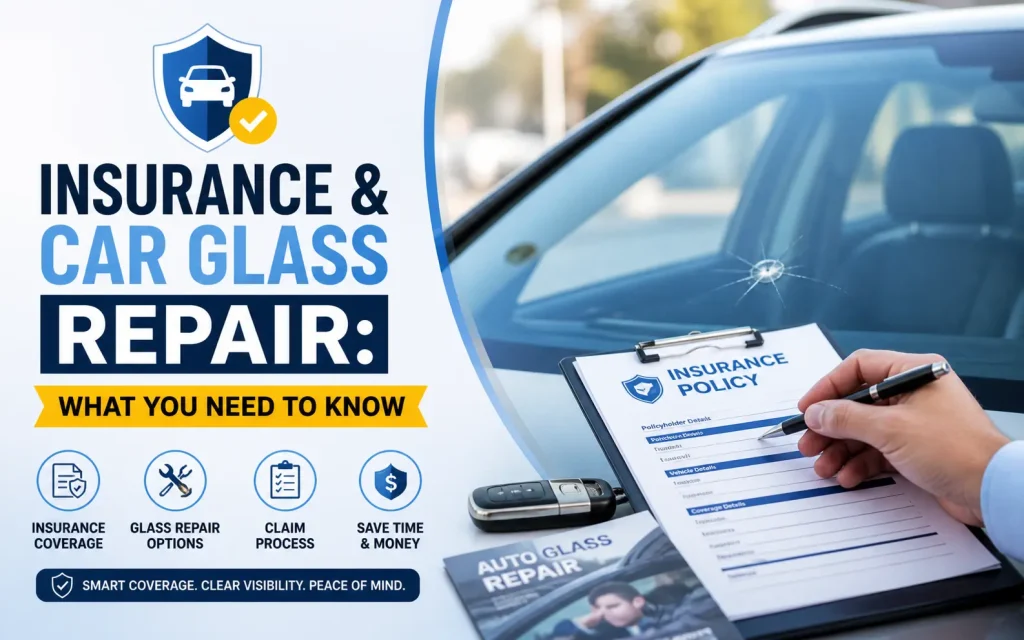
Filing a glass claim is simpler than most people think — but there are a few critical details insurers don’t highlight:
- Comprehensive Coverage Required: Glass damage is covered under comprehensive (not collision) auto insurance. Check your policy before assuming you’re covered.
- Zero-Deductible Glass Endorsements: Some states (like Florida, Kentucky, and South Carolina) mandate zero-deductible windshield repair. Check your state laws.
- Will It Raise My Premium? Filing a single glass claim typically does NOT raise your premium. Only repeated claims in a short period might.
- Mobile Service & Insurance: Most major insurers cover mobile glass repair — you don’t need to drive to a shop.
- Repair vs. Replace and Insurance: Many insurers prefer to cover repair (cheaper) and will waive your deductible entirely if repair is possible. Always ask!
Pro Tip: Before Filing a Claim
- Call your insurer first to verify glass coverage
- Ask specifically if your deductible is waived for repairs
- Ask if you’re free to choose your own repair shop (you legally are, in most states)
- Get a written estimate before authorizing any work
Is It Safe to Drive With a Cracked Windshield?
This question is more important than cost — and most guides don’t address it directly.
- Small chip away from driver’s view: Usually safe for a short time, but get it repaired within days. Temperature changes expand chips rapidly.
- Crack in driver’s line of sight: Dangerous and likely illegal. The distortion affects your ability to judge distance and react.
- Edge-to-edge crack: Severely compromises windshield structural integrity. The windshield supports the roof in a rollover — do NOT drive.
- Shattered side window: Drive only if you must, and only short distances. Exposed glass and lack of weather protection create serious risks.
In most US states, it is illegal to drive with a cracked windshield that obstructs the driver’s view. You can be ticketed, and your vehicle may fail inspection.
Mobile Car Glass Repair vs. In-Shop Service
Both options have genuine advantages depending on your situation:
Mobile Service — Best For:
- You’re at work or home and can’t drive to a shop
- The damage makes driving dangerous or illegal
- Minor repairs (chips, small cracks)
- Weather permits outdoor work (avoid rain, extreme cold)
In-Shop Service — Best For:
- Full windshield or rear glass replacement
- Vehicles requiring ADAS recalibration (needs a controlled environment)
- Complex laminated or acoustic glass
- Warranty documentation and precise workmanship
Most reputable companies offer both. Always confirm that mobile technicians carry the same warranty and insurance as in-shop services.
What Is ADAS Recalibration and Why Can’t You Skip It?
Advanced Driver Assistance Systems (ADAS) — like lane-keeping assist, automatic emergency braking, and adaptive cruise control — rely on cameras typically mounted near or on the windshield. When your windshield is replaced, those cameras shift position by even a fraction of an inch.
Skipping recalibration after replacement means:
- Lane departure warnings may trigger incorrectly — or not at all
- Automatic emergency braking may fail to detect hazards
- Adaptive cruise control may malfunction at highway speeds
- Your vehicle fails to meet its certified safety ratings
Always ask your glass service provider whether your vehicle requires recalibration. If they say ‘probably not’ without checking your vehicle’s VIN or specs, find another provider.
DIY Car Glass Repair Kits: Honest Pros and Cons
DIY repair kits (available for $10–$30) can work for very minor chips in ideal conditions — but they’re not a substitute for professional repair. Here’s the honest breakdown:
Pros
- Cheap and immediately available
- Can stop a small chip from spreading temporarily
- Good for very remote areas with no access to a technician
Cons
- Results are often visually inferior — resin may leave bubbles or clouding
- Improper application can permanently seal in the damage without filling it correctly
- Not suitable for cracks longer than 1 inch
- Won’t meet insurance or inspection standards
- Mistakes may actually make professional repair impossible later
Our verdict: Use a DIY kit only as a temporary measure to prevent spreading. Schedule a professional repair within 48 hours.
How to Choose the Best Car Glass Repair Service
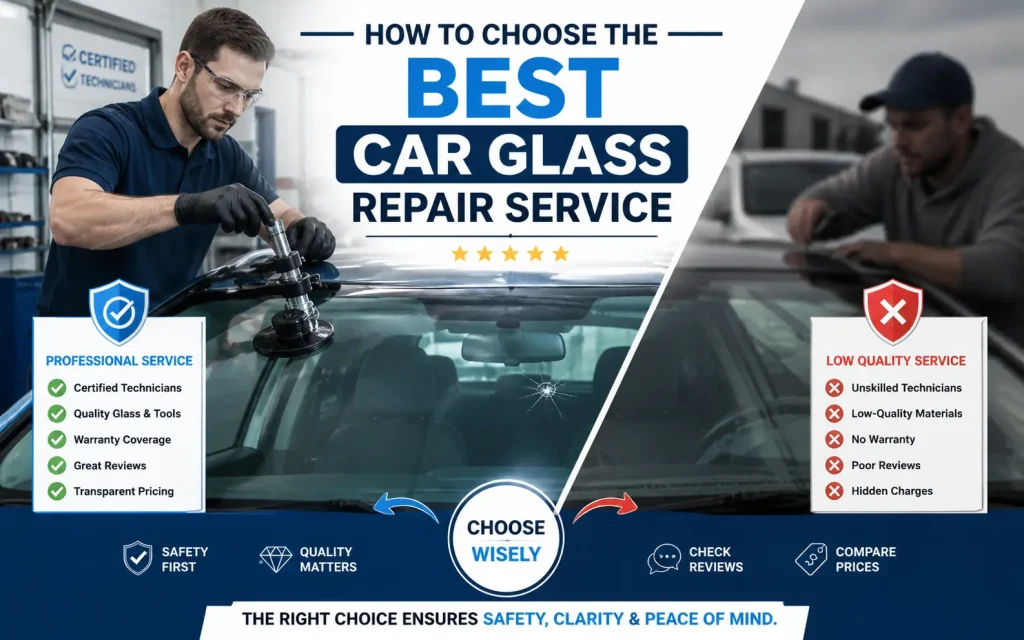
With so many options, here’s how to separate quality providers from corners-cutters:
- Check certifications: Look for technicians certified by the Auto Glass Safety Council (AGSC) — the industry’s leading safety standard.
- Ask about the glass brand: Reputable shops will tell you the manufacturer. Avoid shops that say ‘equivalent glass’ without specifying the brand.
- Warranty in writing: A quality provider should offer a lifetime warranty against leaks, defects, and stress cracks on their work.
- Insurance billing: Look for shops that handle insurance billing directly — it saves you paperwork and potential disputes.
- Google reviews & BBB: Check reviews specifically for glass work. Pay attention to complaints about leaks or improper recalibration.
- Urethane curing time: Replacement windshields use urethane adhesive. Ask how long before the car is safe to drive — minimum 1 hour for standard urethane, longer in cold weather.
How to Prevent Car Glass Damage
Prevention is always cheaper than repair. Here are practical steps most drivers overlook:
- Maintain a 3-second following distance on highways — gravel and debris from trucks cause most chips
- Park in a garage or shaded area — UV exposure and thermal stress weaken glass over time
- Avoid slamming car doors — vibration stress is a hidden cause of edge cracks
- Use only rubber-bladed wipers with proper wiper fluid — dry wiping scratches and weakens glass
- Don’t blast hot air directly on a cold, frosted windshield — thermal shock can crack it
- Apply a hydrophobic glass treatment — it repels water and makes chips less likely to spread
- Address small chips immediately — 24 hours of temperature swings can turn a $75 repair into a $400 replacement
FAQs
Q1. Is repair actually possible for my specific damage, or is replacement needed?
A good technician will physically inspect the damage before answering — not just ask over the phone. Repair is possible if the chip is smaller than 1 inch, the crack is shorter than 6 inches, the damage is not in the driver’s direct line of sight, and it hasn’t reached the windshield’s edge. If any of these conditions aren’t met, replacement is the honest answer. Be cautious of shops that always recommend the more expensive option without a proper inspection.
Q2. Will you use OEM or aftermarket glass?
The right answer depends on your vehicle. For modern cars with ADAS features (lane assist, auto-braking, rain sensors), always request OEM or OEM-equivalent glass — it’s made to your vehicle’s exact specifications. For older or basic vehicles, high-quality aftermarket glass is perfectly acceptable and more affordable. A trustworthy shop will tell you the glass brand and manufacturer, not just say ‘equivalent quality.’ If they can’t name the brand, that’s a red flag.
Q3. Does my vehicle need ADAS recalibration after this service?
If your car has any camera-based safety features — lane departure warning, automatic emergency braking, adaptive cruise control — the answer is almost certainly yes after a windshield replacement. The cameras are mounted on or near the windshield, and even a millimeter of shift in position can throw off their accuracy. A professional shop should check your vehicle’s VIN against the manufacturer’s specs to confirm. If they say ‘no’ without checking, find a different shop.
Q4. Is recalibration included in the price?
Often it is not — and this surprises many customers after the fact. Recalibration can add $150 to $500 to your bill depending on whether your vehicle needs static (in-shop) or dynamic (on-road) calibration. Always ask upfront so you can budget correctly. Some shops bundle it; others bill it separately. If your insurance covers the replacement, ask if recalibration is also covered — many comprehensive policies include it.
Q5. What warranty do you offer — and is it in writing?
A reputable car glass repair or replacement service should offer a lifetime warranty on their workmanship — covering leaks, wind noise, stress cracks caused by improper installation, and defects in the adhesive. The keyword is ‘in writing.’ Verbal warranties mean nothing if there’s a dispute later. Ask for the warranty document before work begins. Also check if the warranty transfers if you sell the vehicle — some do, which adds resale value.
Q6. How long must I wait before driving after replacement?
For windshield replacements, the urethane adhesive used to bond the glass needs time to cure. The minimum safe drive-away time (SDAT) is typically 1 hour under ideal conditions (70°F, normal humidity). In cold weather (below 50°F), it can be 2–4 hours or longer. Some fast-cure urethanes allow driving in as little as 30 minutes. Never drive immediately after replacement — even a small bump before the adhesive cures can compromise the seal permanently, leading to leaks or structural failure.
Q7. Will you handle my insurance claim directly?
Most established glass repair shops will handle the full insurance process for you — verifying your coverage, filing the claim, and billing the insurer directly. You should only need to provide your insurance card and policy number. If a shop says you have to file the claim yourself and get reimbursed, it’s not necessarily a dealbreaker, but it’s less convenient and creates more room for billing errors. Also: you have the legal right to choose your own repair shop in most US states — your insurer cannot force you to use a specific provider.
Q8. Are your technicians AGSC certified?
The Auto Glass Safety Council (AGSC) is the industry’s leading certification body in North America. AGSC-certified technicians have been trained and tested on proper installation procedures, adhesive use, and safety standards. It’s the equivalent of asking if a mechanic is ASE certified. If a shop can’t confirm AGSC certification, ask how their technicians are trained and what quality standards they follow. For any job involving windshield replacement — especially on ADAS-equipped vehicles — certification is not optional, it’s essential.
Final Takeaway
Car glass repair is fast, affordable, and often covered by insurance — but only if you act quickly and make informed decisions. The biggest mistakes drivers make are waiting too long, skipping ADAS recalibration, and choosing the cheapest shop without asking the right questions.
A repaired or replaced windshield isn’t just about visibility — it’s a structural safety component of your vehicle. Treat it that way, and you’ll save money, stay legal, and drive safer.
